
Samdong Rimpoche's visit to China materialised against the backdrop of strained India-China relations consequent to the face-off between Indian and Chinese troops at Doklam, says former RAW officer Jayadeva Ranade.

'India in 2020 is a lot better prepared than in 1962.' 'It is no longer a pushover; and anything other than a crushing Chinese military victory will be a major loss of face for China,' observes Rajeev Srinivasan in the first of a three part column.

The J-20 fighter is called Beijing's answer to the US F-22 stealth fighter and the F-35 that will be soon deployed in the Pacific by the United States and Japan.

Indian and Chinese militaries have agreed on the need to expand cooperation and identify new avenues of engagement, government said on Thursday.

'The missile mounted near Kailash-Mansarovar is called DF-21. It is a medium-range, 2,200 kilometres ballistic missile. Its advantage is that it can cover all cities of north India, including New Delhi'

The focus of the talks will be to ensure mutual development and expanding overall ties, diplomatic sources said.

The Border Defence Cooperation Agreement with China needs closer scrutiny, says Rup Narayan Das.

Modi's arrival has changed the optics of the visit. There is a different demonstration of the confidence level in the Indian leadership, but not much has changed beyond that, reports Sheela Bhatt/Rediff.com.

India said a new mechanism will be set up for issues relating to trade and investment.
'We should not worry too much about Indian capabilities, both military and otherwise.'

Whether it is Sri Lanka, Maldives, or Nepal, quietly but steadily, India has been reclaiming some of the ground it had lost to China, observes Aditi Phadnis.
Pakistan's offer to normalise relations with India is an attempt to buy temporary peace due to its economic and politico-strategic compulsions, notes Brigadier Narender Kumar (retd).

President Xi Jinping's visit may put relations between India and China on a new trajectory
If solutions are not found, adequately and in good time, things could simply slip out of everyone's hands, warns N Sathiya Moorthy.

The PM will meet Mongolian President Tsakhiagiin Elbegdorj on his first ever visit to the country.
The US has been, historically, a sleeping partner in India-China relations. Today, any attempt by the Modi government to make a bilateral move to improve relations with Beijing could upset Biden's apple cart, notes Ambassador M K Bhadrakumar.

'Our defence services are in a position to checkmate any Chinese adventurism.'

During the meeting on the sidelines of the 11th BRICS Summit on Wednesday, prime minister Modi said there was a "new direction and new energy" in bilateral ties after the two leaders' second informal summit in Chennai.

'The Chinese mindset and approach to India is far different from that in Pakistan.' 'This reality makes it possible for us to follow an engagement policy with one, while militating against engagement with the other.'
'A breakthrough in eastern Ladakh leading to disengagement and creation of a buffer zone will obviate the need of military deployment through the winter months ahead,' notes Ambassador M K Bhadrakumar.
However, Beijing expresses readiness for talks to reopen the Nathu La pass for the Kailash-Mansarovar Yatra.

'If our troops on the frontlines were sleeping for two hours, they can perhaps now sleep for 2.5 hours because when the adversary is right in front, then you can't even blink your eyes, you have to be absolutely alert.'

'We are facing the most critical military situation with China in the last 50 years.'

External affairs ministry spokesperson Raveesh Kumar said India does not comment on the internal affairs of other countries and similarly expects other countries to do likewise.

The prime minister, accompanied by senior officials including National Security Advisor Ajit Doval and Foreign Secretary S Jaishankar, met the Chinese leader just before his travel to Myanmar from this port city.

Although the Malabar is a routine exercise which has been carried out for several years now, security experts attach a lot of traction to it in view of China's assertive behaviour in the South China Sea, observes Rup Narayan Das.
In all the noise surrounding the Dok La confrontation, Claude Arpi focuses on a crucial issue that has hardly been covered -- the construction of roads for the armed forces and the local population to reach the most remote border posts.

For a rising country like China with its sights set on global and regional power, any coming together of the US and India is the worst case scenario. Hence, China is concerned with the emerging equations between New Delhi and Washington, says Srikanth Kondapalli.

'From Doklam to Wuhan and the return of the India-China relationship to its previous equilibrium is indeed a major contribution of President Xi and PM Modi. Without any doubt they deserve the kudos for their sagacity and their wisdom,' says Ambassador Gautam Bambawale, India's envoy to China during the Wuhan summit.

Making a statement in Lok Sabha, Singh also said the Indian Army has inflicted heavy costs including casualties on the Chinese side during the clash with the People's Liberation Army at the Galwan valley on June 15.

'There is no democracy, and in fact, there is some kind of monarch ruling.' 'They are protecting themselves and they are scared.''

'If the Chinese military gets hold of some western sectors on the India-China boundary, it will give them added military advantage.'

There are still a few lingering issues towards the progress of India-China bilateral relations, the approach for dealing with each other seems to be quite different. With Modi-Xi bonhomie strengthening, it seems that India and China are ready to recalibrate their approaches towards each other, says Sana Hashmi.
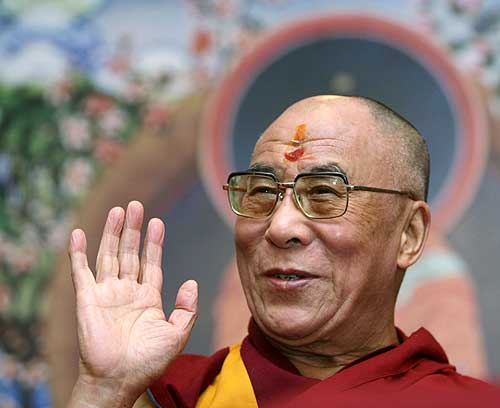
'The first time that China alleged the Dalai Lama was 'anti-national' and 'unpatriotic' was after he affirmed that Arunachal Pradesh and Tawang are part of India,' points out former RA&W official Jayadeva Ranade.

An MoU on sharing hydrological information of the Brahmaputra River by China to India and another pact on amendment of the protocol on phytosanitary requirements for exporting rice from India to China to include non-Basmati rice were signed after the Modi-Xi talks in the eastern Chinese port city.
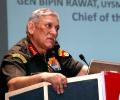
Rawat had said there was a major reduction of Chinese troops in the Doklam area.

India and China on Friday agreed to seek a "political" solution to the border dispute at the earliest as Prime Minister Narendra Modi asked Beijing to "reconsider its approach on some issues" and announced CBMs like e-visa for Chinese tourists and operationalisation of hotline between two militaries.

'They want (the ownership and management of PSU banks) to pass into the hands of a private sector entity.' 'Ownership of these banks will go from the public sector to private sector.'

General Zhao Zongqi is well known in India for having commanded the Chinese troops during the Dokalam episode. Zhao knows every inch and corner of the Indian border, at least the Eastern and Central sectors, including the Naku La area which witnessed fist-fights between Indian and Chinese troops in April/May. Claude Arpi introduces us to the PLA generals masterminding the Chinese aggression in Ladakh.
'We should not treat each other as rivals. We should make cooperation the mainstream, China said.
